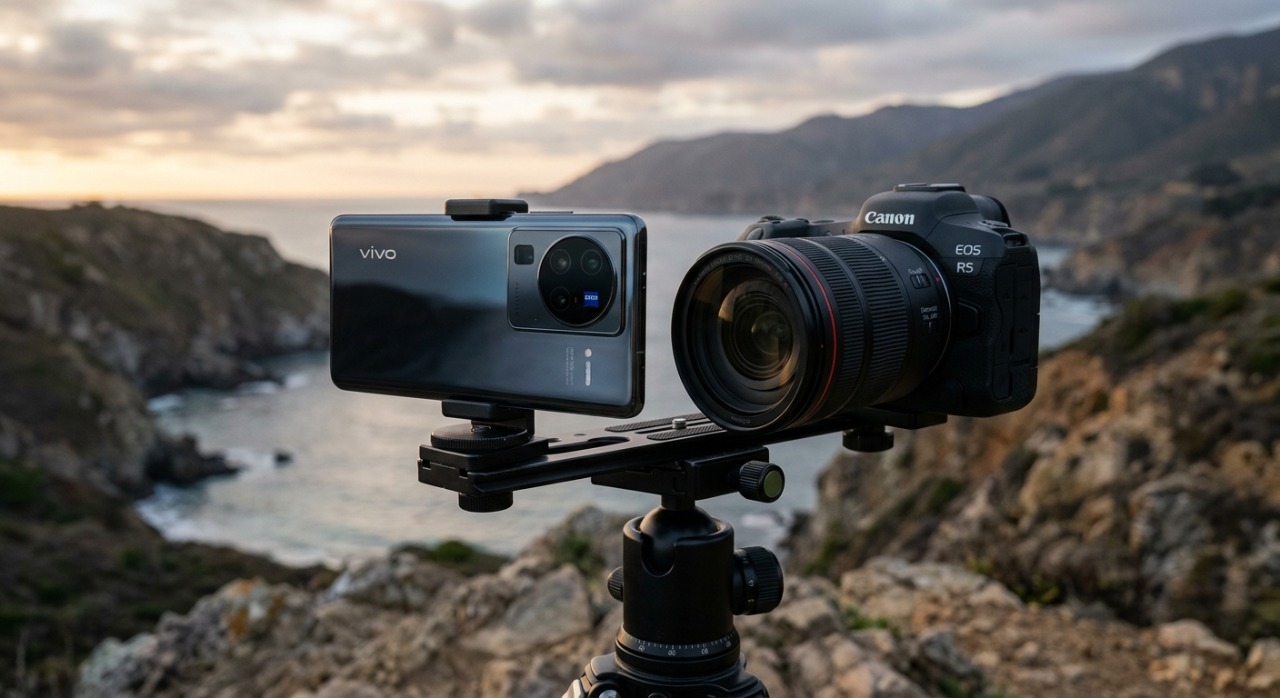
Imagine standing at the edge of the Grand Canyon as the sun begins to set. You reach into your bag, weighing the choice: do you lug out the five-pound DSLR with its massive lens, or do you pull the slim Vivo X300 Ultra out of your pocket?
In 2026, choosing between a big camera and a phone is about more than just what’s easier to carry. Most professional social media creators now use only their phones. With the new Vivo X300 Ultra, it is almost impossible to tell if a photo was taken with a smartphone or an expensive professional camera.
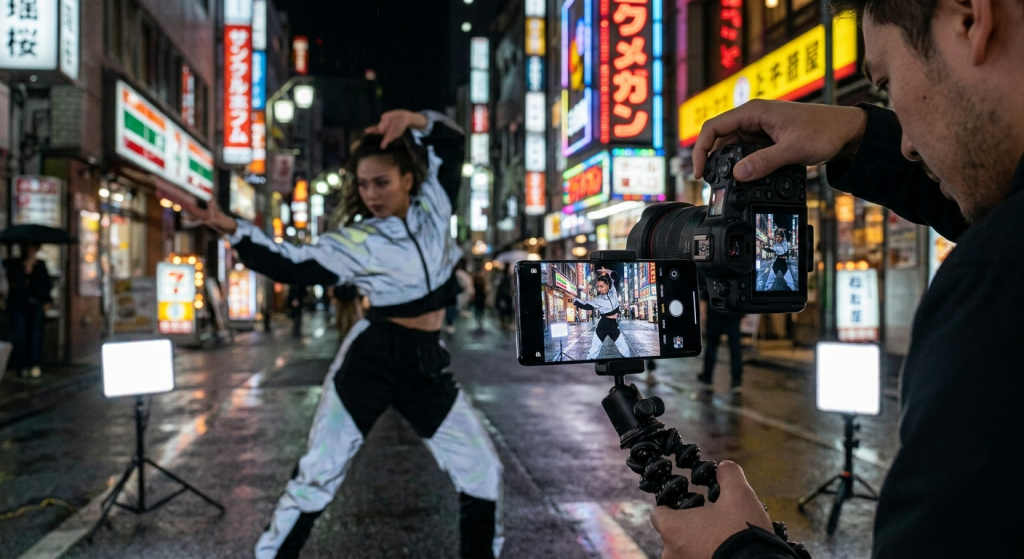
The 200MP Monster: What Makes the Vivo X300 Ultra Different?
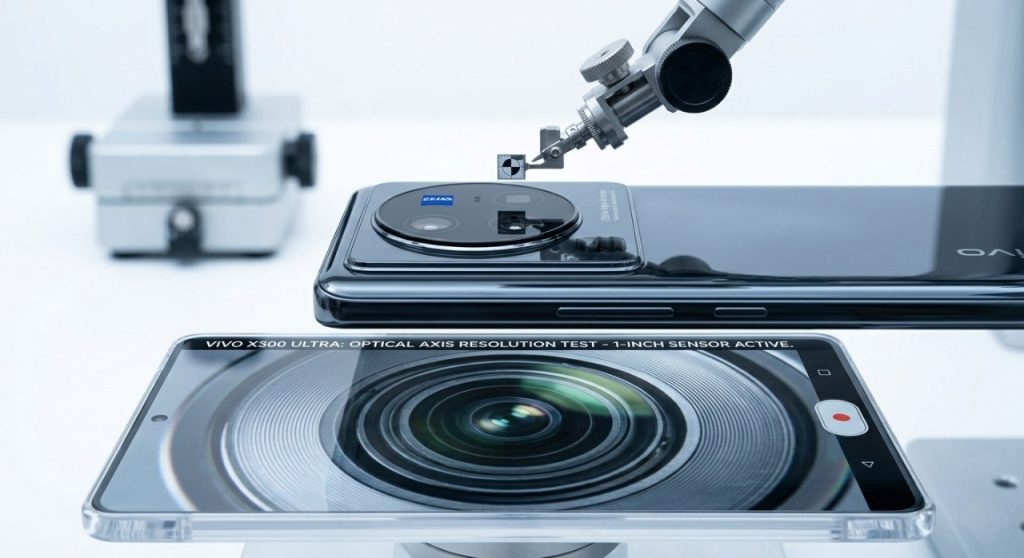
The Vivo X300 Ultra isn’t just a phone with a good camera; it’s a camera that happens to make phone calls. The headline feature is the 200MP ZEISS APO Telephoto lens.
It ensures that colors especially where dark edges meet bright light don’t “bleed” or show weird purple outlines.
Can a Smartphone Really Replace a DSLR in 2026?
The short answer: For 90% of people, yes. The long answer involves a battle between Optical Physics and Computational Intelligence. A DSLR has a giant sensor that physically catches more light. However, the Vivo X300 Ultra uses the Snapdragon 8 Ultra chip to take dozens of photos in a split second and stitch them together.
Why the Vivo Wins:
- Portability: It fits in your jeans. A DSLR requires a dedicated backpack.
- Instant Sharing: You can edit a 200MP shot in Lightroom Mobile and post it to Instagram in seconds.
- AI Smart Zoom: At 10x or even 20x zoom, the Vivo uses AI to “fill in” details that a cheap DSLR kit lens would simply blur.
Why the DSLR Still Holds On:
- True Depth: While the Vivo has a great “Portrait Mode,” a DSLR creates “bokeh” (background blur) naturally through glass, not software.
- Battery & Storage: Pro cameras have swappable batteries and dual card slots essential for an 8-hour wedding shoot.
Expert Analysis: The “Optical Lie” of Megapixels
I’ve been writing about phones since the very first iPhone. I’ll tell you something companies won’t: saying a camera has “200 megapixels” is a bit of a trick, but it does help you take better pictures.
The Vivo doesn’t actually give you a 200MB file every time you click. It uses pixel binning, merging 16 small pixels into one “super pixel” to gather more light.
Our Verdict: The real “DSLR-killer” feature in the X300 Ultra isn’t the megapixels it’s the 1-inch main sensor. This is the largest sensor size physically possible in a modern phone. It allows the X300 Ultra to capture natural light and shadow depth that previous phones had to “fake” with software. If you are a street photographer or a travel vlogger, the gap between this and a Sony A7-series camera is now so small that the extra weight of the “real” camera is becoming harder to justify.
How Does the Vivo Compare to the iPhone 17 Pro and S26 Ultra?
The 2026 flagship race is tighter than ever. While Vivo wins on raw telephoto power, the competition has its own strengths:
- Samsung Galaxy S26 Ultra: Still the king of “Moon Shots” and productivity with the S-Pen. Its AI photo editing is more intuitive for casual users.
- iPhone 17 Pro Max: Remains the undisputed champion of video. If you are filming a movie, the iPhone’s “ProRes Log” format provides better color grading than the Vivo.
- Xiaomi 16 Ultra: The closest rival to Vivo in terms of “Leica” color science, often producing “moodier” and more artistic photos.
Frequently Asked Questions (FAQ)
- Is the Vivo X300 Ultra waterproof?
Yes, it carries an IP68 rating, meaning it can survive being submerged in 1.5 meters of water for 30 minutes. You definitely can’t do that with a standard DSLR!
- Does the 200MP zoom actually look good?
Up to 10x optical-quality zoom, the results are stunning. Beyond 30x, you start to see “AI smoothing,” where the image looks a bit like an oil painting. It’s great for reading a distant sign, but not for a gallery print.
- What is the price of the Vivo X300 Ultra in April 2026?
Expect to pay around $1,299 / £1,100 for the base model. While expensive for a phone, it is cheaper than a professional camera body and three high-quality lenses.
- Can I use it for professional wedding photography?
As a “B-Cam” (backup) or for candid shots, absolutely. For the main ceremony shots where you might need to print large canvases, a full-frame DSLR or Mirrorless camera is still the safer bet.
this is link to my other blog : https://datacntech.site/2026/04/17/upcoming-phones-2026-is-the-new-apple-foldable-finally-worth-the-wait/
this is link to my other blog : https://datacntech.site/2026/04/16/why-the-pixel-11-is-googles-most-critical-hardware-gamble-yet/
great info