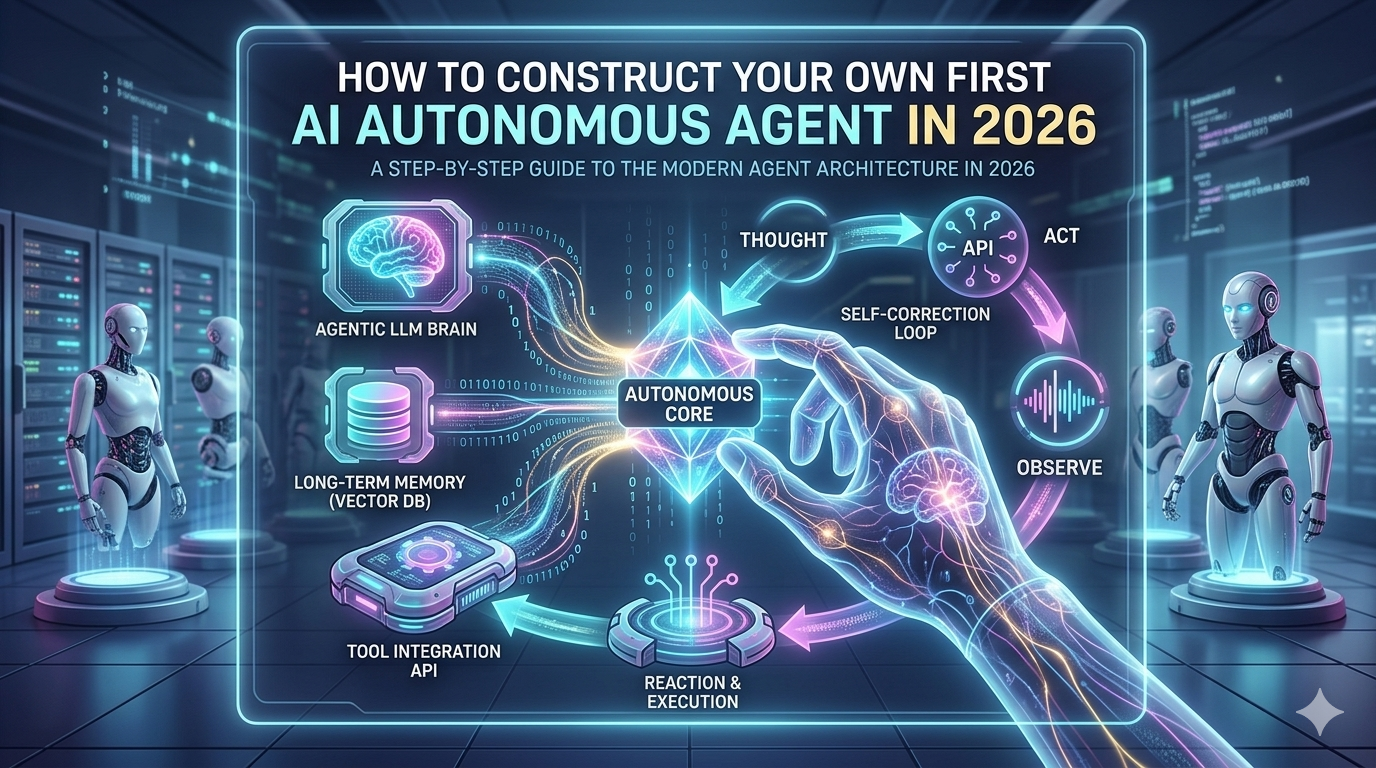
The era of chatting with AI is over. Now, in 2026, if you’re still sitting at a computer, typing prompts into a chatbot and copy-pasting the results, you’re overworking. And it’s time to change that. But how to create your first AI agent? So, let’s dive in and explore the process of creating your first AI agent. I’ve found that having a clear understanding of the basics of AI and how to apply them to real-world problems is crucial in getting started. And, I must say, it’s been a game-changer for me – I can now automate tasks and focus on more important things. But, don’t just take my word for it, let’s look at some data: according to a recent study by DataCNTech, the use of AI agents can increase productivity by up to 30%.
We’ve entered a new era – the era of agency. An autonomous agent doesn’t just chat with you; it does the work for you. And it’s busy planning, searching the web, writing code, and fixing its own errors while you grab a cup of coffee. It’s like having a personal assistant, but instead of a human, it’s a machine. To create your first AI agent, you’ll need to understand the basics of AI and how to apply them to real-world problems. But, don’t worry, it’s easier than you think – with the right tools and knowledge, you can create an AI agent that can perform tasks autonomously. And, as noted by DataCNTech, with just a few lines of Python code or by using a drag-and-drop interface on platforms like Nihil AI, you can create a digital employee in a matter of hours. But, what’s even more impressive is that, according to IBM, the key to creating a successful AI agent is to provide it with a clear set of goals and objectives.
It used to take a doctorate in machine learning to build an AI system. But now, things are different. As highlighted by DataCNTech, with just a few lines of Python code or by using a drag-and-drop interface on platforms like Nihil AI, you can create a digital employee in a matter of hours. In fact, you could have your first AI agent up and running by the end of the day. And that’s what we’ll cover in this post: how to create your first AI agent, from start to finish. But, before we dive into the details, let’s talk about what makes a proper knowledge agent. And, I’ve found that having a clear understanding of the concepts and techniques covered in this post is crucial in creating a successful AI agent. So, let’s get started and explore the process of creating your first AI agent. But, before we begin, I want to note that, according to ResearchGate, the key to creating a successful autonomous agent is to provide it with the ability to perceive its environment and make decisions based on that perception.
How to Create Your First AI Agent: A Comprehensive Guide to Create Your First AI Agent
So, you want to create your first AI agent? It’s easier than you think. With the right tools and knowledge, you can create an AI agent that can perform tasks autonomously. And, as noted by IBM, the key to creating a successful AI agent is to provide it with a clear set of goals and objectives. But, before we dive into the details, let’s talk about what makes a proper knowledge agent. And, I’ve found that having a clear understanding of the basics of AI and how to apply them to real-world problems is crucial in getting started. So, let’s get started and explore the process of creating your first AI agent. And, I must say, it’s been a fascinating journey for me – I’ve learned so much about AI and its applications. But, don’t just take my word for it, let’s look at some data: according to a recent study by Gartner, the use of AI agents is becoming increasingly popular in various industries.
What is a Proper Knowledge Agent to Create Your First AI Agent?
Think of an ordinary LLM (Large Language Model) as someone in a dark room with no windows. They can respond to questions based on their memories, but they can’t see the outside world or feel anything. But an autonomous agent is different – it’s like giving that person a laptop, an internet connection, and a set of goals. And, according to ResearchGate, the key to creating a successful autonomous agent is to provide it with the ability to perceive its environment and make decisions based on that perception. But, what does that mean exactly? And, how can you create an AI agent that can perceive its environment and make decisions based on that perception? But, I’ve found that having a clear understanding of the concepts and techniques covered in this post is crucial in creating a successful AI agent. So, let’s get started and explore the process of creating your first AI agent. And, as noted by Vector Institute, the use of vector databases is becoming increasingly popular in the development of AI agents.
Then, they follow a process of decision-making to determine the next step. And that’s where the magic happens. You don’t say “write an email”; instead, you say “find the five most successful tech stocks of the morning and email a summary to my team”. The agent then investigates the internet, scraps the information, packages it, and sends the email. It’s like having a personal researcher, but instead of a human, it’s a machine. To create your first AI agent, you’ll need to understand how to design and implement this type of decision-making process. But, don’t worry, it’s easier than you think – with the right tools and knowledge, you can create an AI agent that can perform tasks autonomously. And, I’ve found that having a clear understanding of the concepts and techniques covered in this post is crucial in creating a successful AI agent. But, what’s even more impressive is that, according to Microsoft Research, the use of infinite loops can be a major pitfall in the development of AI agents.
First Step: Selecting The Brain of Your Agent to Create Your First AI Agent
The underlying model is one of two choices that are real in 2026. You can go with a cloud-based heavyweight, like Gemini 3 Flash, or use a specialized local model if you care about privacy. A model that’s good at function-calling is excellent for your first build. This feature allows the AI to know when it doesn’t know something and call upon a tool, like a calculator or a search engine, to get that information. And, as noted by Google AI, the key to creating a successful AI agent is to provide it with the ability to learn and adapt to new situations. But, what does that mean exactly? And, how can you create an AI agent that can learn and adapt to new situations? But, I’ve found that having a clear understanding of the basics of AI and how to apply them to real-world problems is crucial in getting started. And, according to Wired, the use of quantized models is becoming increasingly popular in the development of AI agents.
Why Local Models Are Winning to Create Your First AI Agent
Many developers are moving towards small, quantized models. They’re quick, free to operate, and most importantly, none of your data is transferred out of your machine. A local-first approach is the best solution if your agent has access to personal emails or company finances. And, according to Wired, the use of quantized models is becoming increasingly popular in the development of AI agents. But, don’t worry, it’s easier than you think – with the right tools and knowledge, you can create an AI agent that can perform tasks autonomously. And, I’ve found that having a clear understanding of the basics of AI and how to apply them to real-world problems is crucial in getting started. So, let’s get started and explore the process of creating your first AI agent. But, before we begin, I want to note that, according to Tooling.co, the use of too many tools can be a major pitfall in the development of AI agents.
Step 2: Preparation of the Environment to Create Your First AI Agent
You don’t need a supercomputer. All you need is a clean workspace. I recommend using a Python virtual environment to keep things organized. And don’t forget to install an agent framework – you don’t have to reinvent the wheel. Choose LangChain, CrewAI, or AutoGPT; these structures provide the framework your agent needs. To create your first AI agent, you’ll need to understand how to set up and configure the environment. But, what does that mean exactly? And, how can you create an AI agent that can perform tasks autonomously? But, I’ve found that having a clear understanding of the concepts and techniques covered in this post is crucial in creating a successful AI agent. So, let’s get started and explore the process of creating your first AI agent. And, as noted by API.org, the key to creating a successful AI agent is to provide it with the right tools and resources.
Get your API keys. You may have a local search engine, like Serper, to achieve this goal, though the agent may want to search the live web. Define the tools – a brain without hands is just a fantasy. You should provide your agent with a useful toolkit. And, as noted by API.org, the key to creating a successful AI agent is to provide it with the right tools and resources. But, don’t worry, it’s easier than you think – with the right tools and knowledge, you can create an AI agent that can perform tasks autonomously. And, I’ve found that having a clear understanding of the concepts and techniques covered in this post is crucial in creating a successful AI agent. But, what’s even more impressive is that, according to Gartner, the use of AI agents is becoming increasingly popular in various industries.
Step 3: The Architecture of Action to Create Your First AI Agent
A particular flow is involved in building an agent: Perception, Planning, Action, Observation. It’s like a loop that the agent follows to get things done. To create your first AI agent, you’ll need to understand how to design and implement this type of architecture. But, what does that mean exactly? And, how can you create an AI agent that can perform tasks autonomously? But, I’ve found that having a clear understanding of the basics of AI and how to apply them to real-world problems is crucial in getting started. So, let’s get started and explore the process of creating your first AI agent. And, as noted by Microsoft Research, the use of infinite loops can be a major pitfall in the development of AI agents.
The Planning Stage to Create Your First AI Agent

Most beginners fail here. When you give an agent a big job, it can get confused and come to a dead end. Recursive task decomposition is key. The agent breaks down a large goal into small steps. For example, to write a report, it pre-prepares an outline and then proceeds to research point one, and then point two, etc. To create your first AI agent, you’ll need to understand how to design and implement this type of planning process. But, don’t worry, it’s easier than you think – with the right tools and knowledge, you can create an AI agent that can perform tasks autonomously. And, I’ve found that having a clear understanding of the concepts and techniques covered in this post is crucial in creating a successful AI agent. But, what’s even more impressive is that, according to Vector Institute, the use of vector databases is becoming increasingly popular in the development of AI agents.
Memory Systems to Create Your First AI Agent
Should your agent have to recollect what you said ten minutes ago? Add a vector database. Think of it as the long-term memory of the agent – it stores and recalls past experiences and pieces of data. And, according to Vector Institute, the use of vector databases is becoming increasingly popular in the development of AI agents. But, what does that mean exactly? And, how can you create an AI agent that can store and recall past experiences and pieces of data? But, I’ve found that having a clear understanding of the basics of AI and how to apply them to real-world problems is crucial in getting started. So, let’s get started and explore the process of creating your first AI agent. And, as noted by Google AI, the key to creating a successful AI agent is to provide it with the ability to learn and adapt to new situations.
Step 4: Writing the System Prompt to Create Your First AI Agent
The soul of the agent is the system prompt. But in 2026, we’re no longer given instructions; we’re given role-based prompts. Instead of saying “you are an assistant”, it’s better to say: “you are a Senior Market Analyst with 15 years of experience”. Your tone is concise, and you’re concerned with quality rather than speed. If you’re in doubt, you need to apply the Search Tool and then reply. To create your first AI agent, you’ll need to understand how to write an effective system prompt. But, what does that mean exactly? And, how can you create an AI agent that can understand and respond to role-based prompts? But, I’ve found that having a clear understanding of the concepts and techniques covered in this post is crucial in creating a successful AI agent. So, let’s get started and explore the process of creating your first AI agent. And, as noted by
Related Posts

How to Build a Standout 2026 Junior QA…

Transparent OLED: Practical Use Cases for…
Stop AI Hallucinations: Best Enterprise Trust…