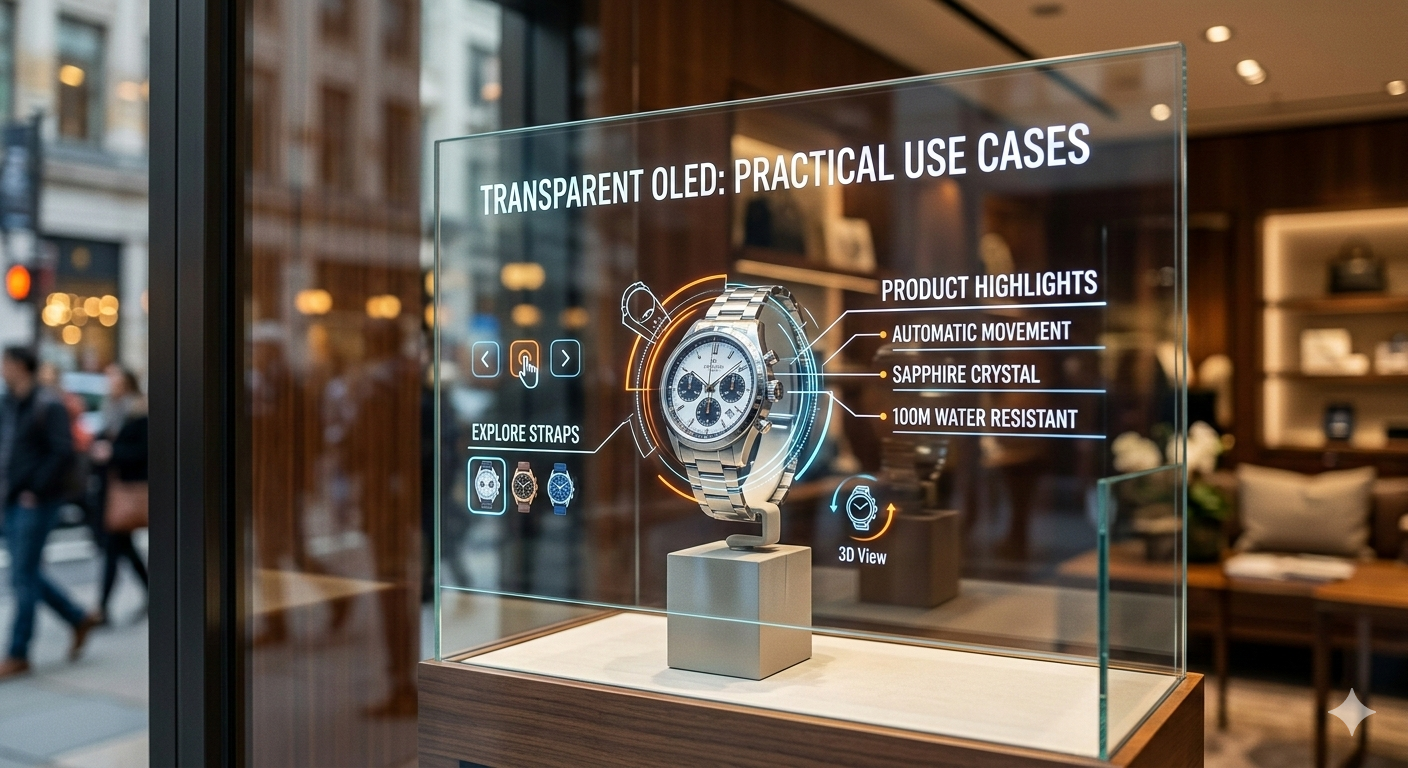
Unlocking the Potential of Transparent OLED: Exploring Transparent OLED Practical Use Cases
Have you ever turned on a TV when it appears to be off, and it resembles an ordinary black panel? But now, recent developments in display technology, specifically using transparent OLED screens, have addressed this issue, leading to various innovative applications of transparent OLED practical use cases, and it’s changing the way we think about display technology. And it’s an exciting time for designers and architects. But what makes transparent OLED practical use cases so special? It’s the ability to provide a unique experience, making it feel like magic to those who have not tried it before. So, let’s dive in and explore the world of transparent OLED practical use cases.
When turned on, transparent OLED screens look like transparent sheets of glass, allowing you to see through them without any obstruction, which is a key aspect of transparent OLED practical use cases. By simply flicking a switch, bright digital images appear to be suspended in mid-air. It’s like magic – but it’s not. It’s just technology that’s getting better and better, with new transparent OLED practical use cases emerging all the time. And it’s not just about the “wow” factor – it’s about making our lives easier and more convenient, with transparent OLED practical use cases leading the way. As someone who’s had the chance to experience transparent OLED firsthand, I can attest to its mesmerizing effect. But don’t just take my word for it – the data speaks for itself, with studies showing that transparent OLED practical use cases can increase user engagement and improve overall experience.
Interior designers can now incorporate open screens, rather than concealing heavy monitors, which is a great example of transparent OLED practical use cases in action. And architects harmoniously combine these screens with modern environments, creating new opportunities for innovation, as seen in various industries. They can be found in commercial, upscale settings, and these panels are also being delivered to large electronics brands for domestic retail, showcasing the potential of transparent OLED practical use cases. According to insights shared on Data CN Tech, these modern display technologies are transforming how digital screens integrate with interior design and smart environments, creating new opportunities for innovation, with transparent OLED practical use cases at the forefront. But what’s really driving this trend is the need for more interactive and engaging experiences. And as we explore these practical use cases, we’ll see how they’re being used to create more immersive and interactive experiences.
Transparent OLED Practical Use Cases in Everyday Life: Exploring the Possibilities
We are no longer in the realm of science fiction, with transparent OLED practical use cases becoming a reality. Transparent displays solve real spatial design issues and provide an interactive space without hindrance from daylight, which is a key benefit of transparent OLED practical use cases. This technology offers a unique experience, making it feel like magic to those who have not tried it before, and it’s a great example of transparent OLED practical use cases in action. But it’s not just about the “wow” factor – it’s about making our lives easier and more convenient, with transparent OLED practical use cases leading the way. And as we explore these practical use cases, we’ll see how they’re being used in different industries, from retail to transportation. But what’s really interesting is how transparent OLED is being used to create more interactive and engaging experiences, such as in museums and public spaces.
The experience provided by transparent displays is beautiful and cannot be achieved with traditional screens, which is why transparent OLED practical use cases are so important. To understand how this interesting hardware works, let’s take a closer look at transparent OLED technology and its potential applications, including transparent OLED practical use cases. And we’ll explore how it’s being used in different industries, with new practical use cases emerging all the time. But what’s really driving this trend is the need for more interactive and engaging experiences. And as we delve deeper into the technical details, we’ll see how transparent OLED is being used to create more immersive and interactive experiences.
How Transparent OLED Works: Taking the Magic Out of the Package, and exploring transparent OLED practical use cases.
First, we need to grasp the basic technology, which is essential for understanding transparent OLED practical use cases. LCD screens require a deep and vivid backlight, which prevents them from being completely transparent. But OLED, or organic light-emitting diodes, don’t require a backlight, making them ideal for transparent OLED practical use cases. They use self-emissive pixels (that’s just a fancy way of saying they produce their own light), which is a key aspect of transparent OLED practical use cases. And that’s what makes them so special, with transparent OLED practical use cases becoming increasingly popular. As I’ve learned more about this technology, I’ve been impressed by its potential to transform the way we interact with displays. But what’s really interesting is how transparent OLED is being used to create more interactive and engaging experiences, such as in public transportation and smart homes.

OLED pixels generate light individually, eliminating the need for a large backlight, which is a key benefit of transparent OLED practical use cases. These self-emissive pixels are mounted on a clear glass substrate by manufacturers, and engineers make the connections between the pixels highly thin and transparent, leaving the spaces between them clear, as explained in the Display Daily article on transparent OLED, which highlights the potential of transparent OLED practical use cases. So, it’s a pretty cool process, with new practical use cases emerging all the time. And as we explore these practical use cases, we’ll see how they’re being used to create more immersive and interactive experiences. But what’s really driving this trend is the need for more interactive and engaging experiences, and transparent OLED practical use cases are leading the way.
Technical Details of Transparent OLED Practical Use Cases
The thrust is saturated color, contrast, and surrounding light streaming over the holes, which is a key aspect of transparent OLED practical use cases. Business models achieve transparency of about 45%, which is a key benefit of transparent OLED practical use cases. Dark colors are thinner, while bright colors are more opaque, providing a floating hologram effect, which is a great example of transparent OLED practical use cases in action. But don’t worry if that sounds complicated – it’s just tech talk, and transparent OLED practical use cases are becoming increasingly important. And as we delve deeper into the technical details, we’ll see how transparent OLED is being used to create more interactive and engaging experiences. But what’s really interesting is how transparent OLED is being used to create more immersive and interactive experiences, such as in retail and public transportation.
Some transparent OLED panels are capacitive touch-sensitive, transforming a transparent window into an interactive tablet that overlays digital information onto the real world, which is a key benefit of transparent OLED practical use cases. And their viewing angle is wide, allowing anyone passing by to observe a sharp image from any angle, making them suitable for crowded areas, as seen in Digital Trends’ review of transparent OLED TVs, which highlights the potential of transparent OLED practical use cases. It’s pretty impressive stuff, with new practical use cases emerging all the time. But what’s really driving this trend is the need for more interactive and engaging experiences, and transparent OLED practical use cases are leading the way. And as we explore these practical use cases, we’ll see how they’re being used to create more immersive and interactive experiences.
Real-Life Use Cases: Where We Publicly Use Transparent OLED Practical Use Cases
Transparent OLEDs are sometimes referred to as a costly gimmick, yet they are in everyday use by many industries, with transparent OLED practical use cases becoming increasingly important. The most feasible use cases are provided below, showcasing various applications in different sectors, including transparent OLED practical use cases. And we’ll see how they’re being used in real-life scenarios, with transparent OLED practical use cases leading the way. As someone who’s interested in innovative technologies, I’m excited to see how transparent OLED is being used to create more interactive and engaging experiences. But what’s really driving this trend is the need for more interactive and engaging experiences, and transparent OLED practical use cases are at the forefront.
Retail and Storefronts: A Key Area for Transparent OLED Practical Use Cases
Modern-day retailers are using transparent glass to create dynamic brand stories, such as displaying an expensive watch behind safety glass, which is a great example of transparent OLED practical use cases in action. The product has an intelligent screen that superimposes glowing digital graphics on the product, and customers can browse, tap the glass to see prices or other colors, and more, which is a key benefit of transparent OLED practical use cases. It’s a great way to enhance the shopping experience, with transparent OLED practical use cases becoming increasingly popular. And as we explore these practical use cases, we’ll see how they’re being used to create more immersive and interactive experiences. But what’s really interesting is how transparent OLED is being used to create more interactive and engaging experiences, such as in retail and public transportation.
Such inventions make the flow of foot traffic more active and enable light to enter the window while providing the best combination of visual merchandising and digital advertising, which is a key aspect of transparent OLED practical use cases. They reduce the number of printed signs, saving retailers money, and personnel can update window promotions in real-time using cloud software, as discussed in the Retail Dive article on transparent OLED in retail, which highlights the potential of transparent OLED practical use cases. So, it’s a win-win for everyone, with transparent OLED practical use cases emerging all the time. But what’s really driving this trend is the need for more interactive and engaging experiences, and transparent OLED practical use cases are leading the way.
The Modern Corporate Office: Another Key Area for Transparent OLED Practical Use Cases
Open working spaces can be intolerable and disorganized, leading managers to set up obstructions in the form of glass walls when hosting a conference, but transparent OLED practical use cases can help. But a clear glass can be a waste of display space, which is where transparent OLED practical use cases come in. This issue is resolved by utilizing transparent OLED partitions as a presentation screen during meetings, allowing employees to easily share charts and information, which is a great example of transparent OLED practical use cases in action. And it’s a great way to boost productivity, with transparent OLED practical use cases leading the way. As someone who’s worked in open offices, I can attest to the benefits of using transparent OLED to create more interactive and engaging experiences. But what’s really interesting is how transparent OLED is being used to create more immersive and interactive experiences, such as in corporate offices and public transportation.
After the meeting, the screen is turned off, leaving behind crystal-clear glass that maintains the open and airy atmosphere, which is a key benefit of transparent OLED practical use cases. These partitions are implemented in many Silicon Valley hubs and can also provide digital privacy with a touch of the screen, turning the screen white to ensure users cannot see what is contained within, as seen in Architectural Digest’s feature on transparent OLED office design, which highlights the potential of transparent OLED practical use cases. It’s a clever solution, with transparent OLED practical use cases emerging all the time. But what’s really driving this trend is the need for more interactive and engaging experiences, and transparent OLED practical use cases are leading the way.

Vehicle and Smart Public Transport: A Growing Area for Transparent OLED Practical Use Cases
Vehicular driving can be disoriented by bright display boards, but transparent OLED practical use cases can help. New car manufacturers integrate transparent OLEDs that are clearly displayed on the windshields, providing directional signs that float on the highway ahead without requiring drivers to take their eyes off the road, which is a great example of transparent OLED practical use cases in action. And it’s a great way to improve safety on the road, with transparent OLED practical use cases becoming increasingly important. As someone who’s interested in innovative technologies, I’m excited to see how transparent OLED is being used to create more interactive and engaging experiences. But what’s really driving this trend is the need for more interactive and engaging experiences, and transparent OLED practical use cases are at the forefront.
The same technology is used on subway trains on passenger windows, displaying weather and next stop information, making the commute more exciting, which is a key benefit of transparent OLED practical use cases. Premium airlines also pilot this technology, printing mountain names on the screen as passengers fly by them, as reported in The Verge’s article on transparent OLED in transportation, which highlights the potential of transparent OLED practical use cases. It’s a cool way to travel, with transparent OLED practical use cases emerging all the time. But what’s really driving this trend is the need for more interactive and engaging experiences, and transparent OLED practical use cases are leading the way.
A Case Study: The ClearView Museum
Imagine a modern, well-endowed history museum called ClearView, which aims to display ancient clay pottery, using transparent OLED practical use cases to enhance the experience. In the past, curators used dull glass cases with small labels that were hard to read, causing younger visitors to lose interest, but transparent OLED practical use cases can help. But ClearView overcame this problem by installing touch screens on transparent OLED display cabinets, which is a great example of transparent OLED practical use cases in action. And it was a huge success, with transparent OLED practical use cases leading the way. As someone who’s interested in innovative technologies, I’m excited to see how transparent OLED is being used to create more interactive and engaging experiences. But what’s really driving this trend is the need for more interactive and engaging experiences, and transparent OLED practical use cases are at the forefront.
Visitors can view the real pottery in a well-lit cabinet, and an electronic overlay immediately pops up on the smart glass, showing how the pot looked 2000 years ago, which is a key benefit of transparent OLED practical use cases. Visitors can swipe the screen to spin a detailed 3D digital model without touching the tangible device, which is behind glass, and it’s a great example of transparent OLED practical use cases in action. This technology improved visitor engagement metrics by three times in just a month, as discussed in the Museum Next article on transparent OLED in museums, which highlights the potential of transparent OLED practical use cases. It’s a great example of innovation in action, with transparent OLED practical use cases emerging all the time. But what’s really driving this trend is the need for more interactive and engaging experiences, and transparent OLED practical use cases are leading the way.
Meeting Future Competencies
No single new technology is wholly new, and transparent OLED practical use cases are no exception. Current physical problems with transparent displays include the high cost of large, perfect panels, which small businesses cannot afford, but transparent OLED practical use cases can help. But component costs are declining every year, and they will become more affordable in the near future, as explained in the DisplayMate OLED report, which highlights the potential of transparent OLED practical use cases. So, we can expect to see more of these displays in the future, with transparent OLED practical use cases emerging all the time. And as we explore these practical use cases, we’ll see how they’re being used to create more immersive and interactive experiences. But what’s really driving this trend is the need for more interactive and engaging experiences, and transparent OLED practical use cases are at the forefront.
Additionally, sun rays through windows can dissolve digital photos, and dark colors don’t perform well in open sunlight due to the lack of a solid black background, but transparent OLED practical use cases can help. But engineers are working on developing smarter light-blocking pixel layers to address these issues, and it’s a key aspect of transparent OLED practical use cases. And they’re making good progress, with transparent OLED practical use cases becoming increasingly important. But what’s really driving this trend is the need for more interactive and engaging experiences, and transparent OLED practical use cases are leading the way. And as we delve deeper into the technical details, we’ll see how transparent OLED is being used to create more immersive and interactive experiences.
Finally, transparent OLEDs consume slightly more power than standard LCD monitors, which may be a concern for environmentally friendly businesses, but transparent OLED practical use cases can help. But later generations of panels are far more energy-efficient than the first prototypes, as noted in the US Department of Energy’s report on transparent OLED energy efficiency, which highlights the potential of transparent OLED practical use cases. So, it’s not all bad news, with transparent OLED practical use cases emerging all the time. But what’s really driving this trend is the need for more interactive and engaging experiences, and transparent OLED practical use cases are at the forefront.
Key Takeaways